Disability News and Events:
National and Around the World
Tweet
Hot Off the Press! National and Around the World will be updated monthly highlighting the latest disability-related news and events. Check out what is happening on the disability-front around the nation and the world.
If you have recently viewed this page, after loading the page be sure to click on the refresh button on your browser to see the current version of Hot Off the Press! National and the articles below.
March 2026 - Private Equity's Transformation of American Medicine - Implications for Health Equity
Private equity firms have gained increasing control of U.S. health care infrastructure. Along with other potential consequences, this growth threatens to undermine progress in health equity. Click to continue
March 2026 - GLP-1 Therapy for Epileptic Seizures?
Epilepsy affects 50 million individuals worldwide and is characterized by recurrent unprovoked seizures. GLP-1 RA users experienced an 18% lower hazard of recurrent seizures and modest absolute reductions in recurrence, hospitalization, and mortality. Read more

March 2026 - Over-Apologizing and Disability
Excessive apologizing is a common but often misunderstood behavior among people with disabilities. It is often mistaken for a personality trait. In reality, it is usually a learned trauma response. Overcoming this habit does not mean becoming confrontational or insensitive. It means reclaiming self-worth and unlearning trauma-based responses. Read more on our blog.

March 2026- A Story of Being Human: More Alike Than Different
My day to day isn't that different [from anybody else's]. Having a disability isn't really anything special. I just need help doing things. There is too much of a divide, and a stigma of disability. Just be social with people with disabilities. Just interact and not make it a big deal. To continue, click here.
February 28, 2026- Hospital and External Patient Advocates
New Horizons Un-Limited has written a guide on Hospital and External Patient Advocates. If an issue can be handled directly with a first party (doctor or nurse), that is often best. If when you feel a need to escalate concerns or issues, hospital-based patient advocates are usually your first and, in most cases, the only advocates you need. Their main goals are to listen, provide answers, address complaints, and serve as a liaison between doctors, nurses, staff, billing departments, and other hospital services. You also have the option of using an external advocate. Read more
January 31, 2026 - Better Ways for Patients to Communicate With Their Doctors
New Horizons Un-Limited has written a guide on Better Ways for Patients to Communicate With Their Doctors. Advocating for you as a patient with a disability and navigating the world of doctors. Clear, respectful, and assertive communication can significantly improve medical care, safety, and outcomes. The following strategies help patients prepare for appointments, communicate effectively during visits, and reduce the risk of misunderstandings. Read more
December 31, 2025 -Progress in Understanding, Diagnosing, and Treating Mental Illness - and the Work Still Ahead
New Horizons Un-Limited has written a guide on Progress in Understanding, Diagnosing, and Treating Mental Illness - and the Work Still Ahead For generations, people with mental illnesses have faced attitudes rooted in fear, misunderstanding, and stigma. But today, thanks to decades of advocacy, research, and human rights work, the way society understands mental health has changed dramatically. We have made real progress-yet the fight for dignity, fairness, and equity is far from over. Read more.
December 31, 2025 - Guide to Alternative Funding in Lieu of Medicaid Budget Cuts
New Horizons Un-Limited has written a guide on Alternative Funding in Lieu of Proposed Medicaid Budget Cuts. The budget plan instructs the Energy and Commerce Committee to identify at least $800 billion in mandatory cuts over ten years. Fortunately, private non-profit organizations exist to provide some hope for People with Disabilities. While these organizations were not meant to replace Medicaid services, they can be helpful and beneficial in providing grants for people who are on Medicaid to find more resources. Read more
November 30, 2025 - Unethical Practices of Medical Providers - Past, Present, and Positive Steps for People with Disabilities
For over a century, people with disabilities have faced discrimination, atrocities and unethical treatment in healthcare. True medical ethics demand vigilance: every patient's life, dignity, and autonomy must be respected. New Horizons Un-Limied advocates for fair treatment in healthcare. When healthcare embraces inclusion, accessibility, and empathy, set a standard for equitable treatment for all. Read more

November 1, 2025 - November is National Family Caregivers Month
Each November, we honor the more than 63 million Americans who provide care for their family members. We not only want to recognize the compassion and dedication provided, but also raise awareness of the obstacles many family caregivers face. We have updated our Guide for Family Caregivers to provide important context, tips and resources. If you are in need of help, call the Caregiver Help Desk at (855) 227-3640.

October 10, 2025 - A Story of Being Human: The Fight is Worth it
"I really had to fight for this. Those years were intense, but I just felt such empowerment to do it. It was worth it, fighting for Caleb. But, other people have other gifts that they need to be open to as well. I felt like I needed to pave the way for other parents." Read more on our blog.
October 2025- Mount Sinai Study Finds Prenatal Acetaminophen Use Could Increase Risk of Neurodevelopmental Disorders
A large-scale review by researchers at the Icahn School of Medicine at Mount Sinai has found that taking Aceteminophen while pregnant could increase the risk of the child developing autism and ADHD. While the study did not find any direct causation, it does urge caution and review of clinical recommendations. Read more.
October 1, 2025- NHU Call for Action for the update of the U.S. Certificate of Live Birth for more comprehensive data collection at birth to find the cause of Autism/Neurodiversity and other Developmental Disabilities
The unprecedented rise in incidence of Autism/Neurodiversity in this decade was the concern, for the recent U.S. Administration press conference on September 23, 2025 hosting the director of the National Institute of Health (NIH) and a few family members who have had children who have Autism/Neurodiversity. Autism has risen from fewer than 1 in 2,000, five decades ago, to approximately 1 in 31. Recognizing science has not been able to establish the cause of this rise in Autism, they emphasized the need to find causes. NIH announced the U.S is releasing, $50 million, to fund 13 in depth research projects across the U.S. in the hope to find the causes of Autism. They stated transparency of findings and confidentiality of private records would be upheld.Thru this new "Autism Data Science Initiative Funded Research," 13 major grant awards will research toxic and exposomics, environment, medical, nutrition, events during pregnancy, biology and genetics and partner with families and physicians.
It appears one study will use data from the U.S. Certificate of Live Birth from a Midwest hospital to see if parental age, maternal diabetes or prenatal complications to find contributing factors and pair with certain autism traits. This information will be available from the certificates. Although there is a lot of information collected on the U.S. Certificate of Live Birth, in 2015, it was revised but still does not include any other options to what happened at birth but what is on the certificate.
We at New Horizons Un-Limited have been advocating for the Birth Data Quality Workgroup to up-date the U.S. Certificate of Live Birth to more adequately collect data at birth with our report in 2015. Please see our report at NHU Report on the Prevention of Disabilities Spring 2015
Now 15 years later, we are asking why this data cannot be more comprehensively reported at birth with the U.S. Certificate of Live Birth in a world of revolutionized communication and technology systems and our ability to collect data. With the future rapid advances and revolutionary power of A.I. advancing our ability to collect and interpret data, this should be an achievable goal. By failing to concentrate on data resources for prevention, we are marginalizing human life at great cost.
2025- Multiple Sclerosis and Depression
This information guide is written by New Horizons Un-Limited staff. The guide provides information about Depression, Anger, and Anxiety in Multiple Sclerosis (MS), why Multiple Sclerosis (MS) affects mood, why depression happens with MS, treatment options for Depression with MS and more.Read more
September 11, 2025 - Rewriting the Chapter on Cystic Fibrosis - The 2025 Lasker-DeBakey Clinical Medical Research Award
The 2025 Lasker-DeBakey Clinical Medical Research Award has been presented to Michael J. Welsh for his key role in developing a novel, lifesaving triple-drug combination treatment for cystic fibrosis. Click here to continue.
September 1, 2025 - Researchers Confirm What Fibromyalgia Patients Have Known All Along
Once thought to be a psychological disorder, there is abundant evidence from studies of blood, muscle and brain that ME/CFS is a physical syndrome. No kidding! Click here to continue.
September 5, 2025 - Group Looks To Improve Care For Adults With Cerebral Palsy
For decades, cerebral palsy resources have focused on the needs of children, but with a new toolkit, that could be changing. There are more than 800,000 adults with cerebral palsy in the U.S., the nonprofit said, and the toolkit is aimed at guiding them, their caregivers and health care providers. Click here to continue.

August 12, 2025 - A Story of Being Human: Where There's A Will, There's a Way - It's Medicaid
"Will is working his first job at the local pool. This is his first summer working. We actually saw the announcement in the newsletter from school. They have different employers come during lunchtime and we decided that would be a wonderful summer job for him." To continue to read.
August 13, 2025 - Mount Sinai Study Finds Prenatal Acetaminophen Use Could Increase Risk of Neurodevelopmental Disorders
A large-scale review by researchers at the Icahn School of Medicine at Mount Sinai has found that taking Aceteminophen while pregnant could increase the risk of the child developing autism and ADHD. While the study did not find any direct causation, it does urge caution and review of clinical recommendations. Read more.

August 13, 2025 - A Story of Being Human: Representation Matters
A little over 10 years ago I was making dolls just for fun. Someone on Facebook saw a doll and said it looked like her daughter, except her daughter had her leg amputated. A friend of hers reached out to me and asked if I could make a doll without a leg. To continue to read.

April 24, 2024 - Microplastics Make Their Way From the Gut to Other Organs
Researchers at University of New Mexico researchers have found that microplastics, are having a significant impact on our digestive pathways, making their way from the gut and into the tissues of the kidney, liver and brain. Microplastics not only adversely affects fetal and neonatal body weight but also compromises fetal organ development. Click here to continue.

March 8, 2024 - Texas Invests in Special Ed Teachers
The University of Texas at Arlington received 1.25 million in federal funds to help students pursuing degrees in special education. The five-year grant will fund six students per year and cover 100% of in-state tuition, fees and other costs, such as textbooks, housing and child care needs. Click here to continue.

April 17, 2024- Social Security Expands SSI Rental Subsidy Policy
Good News! Social Security says it's ok to get a discount on rent. In addition to groceries, any discount on rent will not affect a person’s SSI eligibility or payment amount. Click for more info.

March 28, 2024- Childhood Obesity Doubles the Risk of MS
New research to be presented at this year's European Congress on Obesity in Venice, Italy (12-15 May) shows that having obesity in childhood is associated with a more than doubling of the risk of later developing multiple sclerosis. Click here to continue.

March 8, 2024 - Mercer Labs Museum in NYC uses Braile in Art Exibit
The New York Times has an op-ed piece on the controversial use of braille in a new art installation, at the Mercer Labs Museum in NYC. Some say it's patronizing, while others say it's inclusive. Either way, people are talking about it. Click here for more info.

December 13, 2023 - Lidocaine may be able to kill certain cancer cells by activating bitter taste receptors
Lidocaine, often used as numbing agent for outpatient medical procedures, activates certain bitter taste receptors through two unique mechanisms that result in cancer cell death, according to researchers from the Perelman School of Medicine. Click here to continue.
April 6, 2022 - Subminimum Wage - Exploitation, Charity or Opportunity?
Did you know that adults with disabilities can be paid $3.30 an hour or less? In 1938, the federal government passed the Fair Labor Standards Act (FLSA) with a provision called Section 14(c) that allows employers to pay people with disabilities less than minimum wage. This practice of paying subminimum wage is also known as "sheltered employment".Many believe that sheltered employment is outdated. A recent report from the U.S. Commission on Civil Rights argues the exemption should be phased outentirely because these "sheltered workshops," as they are called, trap workers in "exploitative and discriminatory" job programs. And disability-rights advocates say the program limits the potential of these workers with special needs.
According to The Government Accountability Office, only 5% of individuals who go into sheltered employment obtain competitive, integrated employment. They are often stuck in mundane and repetitive tasks that don't transfer into skills for other employment opportunities. Proponents of sheltered employment argue that they provide a service and that subminimum wage is really therapeutic pay to individuals who cannot perform minimum wage jobs. Many of these workers are just looking for a sense of dignity and the opportunity to say "I have a job". Others argue that therapeutic pay allows employers to be able to afford a low stress environment where there are no deadlines or quotas.
The Federal Administration doesn't agree. The US Department of RSA has a new grant program known as the Subminimum Wage to Competitive Integrated Employment. States can vie for a piece of a $167 million demonstration project that will help bridge the gap between therapeutic pay and standard federal minimum wage.
"It's completely unacceptable that some workers with disabilities are still paid subminimum wages simply because they have a disability, said Sen. Patty Murray, D-Wash., who helped to secure funding for the demonstration project. Workers with disabilities deserve to be paid fairly for their work - it's as simple as that."
For more information, go to : applications for demonstration project funds.
 January 20, 2022 - Place Your Order for Free At-Home COVID-19 Tests
Residential households in the U.S. can order one set of #4 free at-home tests from USPS.com. Here's what you need to know about your order:
- Limit of one order per residential address
- One order includes #4 individual rapid antigen COVID-19 tests
- Orders will ship free starting in late January
- Fill in the form with your contact and shipping information to order your tests.
January 17, 2022 - Celebrate and Honor the Rev. Dr. Martin Luther King, Jr. and his Legacy!
"We must accept finite disappointment, but never lose infinite hope. Our lives begin to end the day we become silent about things that matter. -- Rev. Dr. Martin Luther King Jr., I Have a Dream: Writings and Speeches That Changed the World.
Through his activism and inspirational speeches, he played a pivotal role in ending the legal segregation of African-American citizens in the United States, as well as the creation of the Civil Rights Act of 1964 and the Voting Rights Act of 1965. Be inspired and honor his legacy from his courage, his positive activism and the rights of all American citizens. Oppose discrimination and oppression with actions of acceptance and freedom!
Several state's legislators are limiting access to voting. Access to voting is imperative for a free society! If you feel your right to vote will be suppressed, write your state legislators.
January 17, 2022 - Support passage of the Freedom to Vote Act
Contact your US Senator to pass the Freedom to Vote Act which strengthens the right to vote for all Americans and includes specific voting accessibility for people with disabilities.
If you don't agree with various state legislators passing legislation to suppress the vote or why these legislators are introducing voter suppression laws, speak up. CALL YOUR LEGISLATORS and let them know! We must remain vigilant and determined to expose what they are trying to do by introducing and passing voter suppression laws. If anyone needs to have their vote suppressed, let it be those who try to take away the right to vote.
In addition the Freeedom to Vote Act includes specifically Section
Subtitle B-Access to Voting for Individuals With Disabilities
which includes:
Sec. 1101. Requirements for States to promote access to voter registration and voting for individuals with disabilities.
Sec. 1102. Establishment and maintenance of State accessible election websites.
Sec. 1103. Protections for in-person voting for individuals with disabilities and older individuals.
Sec. 1104. Protections for individuals subject to guardianship.
Sec. 1105. Expansion and reauthorization of grant program to assure voting access for individuals with disabilities.
Sec. 1106. Funding for protection and advocacy systems.
Sec. 1107. Pilot programs for enabling individuals with disabilities to register to vote privately and independently at residences.
Sec. 1108. GAO analysis and report on voting access for individuals with disabilities.
Access to voting is imperative for a free society! If you feel your right to vote will be suppressed, write your US Senate legislator today!
December 2021 - verywellmind reviews Best Online Anxiety Support Groups of 2021
Getting help and advice is just a few clicks away
By Amy Morin, LCSW
"Online anxiety groups typically consist of a manageable group of anxiety sufferers that's moderated by a volunteer who may be a current or former anxiety sufferer themself. While they may have a regular time for meetings, participants can usually also leave messages for the group at any time. Online anxiety support groups can be an incredibly useful aspect of anxiety treatment".. so verywellmind has created a list of on-line anxiety support groups.
Getting help and advice is just a few clicks away. Visit the link above.
October 2021 - K. Jane Lee, MD, MA, associate professor of pediatrics and bioethics and medical humanities, Complex Care Program at Children's Wisconsin and the Medical College of Wisconsin, published her book "Catastrophic Rupture: A Memoir of Healing
As a pediatrician she saw how the medical community sees disability as an impairment to the body, however when a complicated delivery left her second child with a severe brain injury, she learned the perspective from the parent that sees the beauty and value in the person, her child. All author profits will be donated to the Complex Care Program at Children's Wisconsin and the Medical Humanities Program at the Medical College of Wisconsin. This book is available through Ten/16 Press
September 2021 - New Concussion Info and Prevention Infographic from the CDC - Distribute and Help Prevent Disability
This new Concussion Info and Prevention Infographic for kids from the CDC states almost 1/2 million kids with traumatic brain injury are treated each year in emergency departments. The infographic includes the signs of brain injury and safety prevention. For more information for kids, parents, coaches, teachers, school nurses and administrators, visit the CDC -CDC Heads Up Campaign
September 2021 - NHU's celebrates the life of Arylene B. Miller
To know this woman is to know love, inspiration, determination, and resilience. Arylene was an avid advocate for people and students with disability. She read extensively throughout her life, researched extensively about the health and well-being for people with disabilities, and their rights. She often wrote that we should remind everyone that people with disabilities are citizens and they deserve all the rights as such. Arylene wanted to create a platform where those with disabilities could share their solutions to common problems. Her ideas to enlarge the opportunities for young adults with disabilities in education, recreation, and computer technology led and inspired our New Horizons Un-Limited programs. To read her memorial, visit NHU Remembers: Arylene B. Miller
August 2021- Hope for those who have become disabled and lost jobs from Long COVID
Whitehouse FACT SHEET: Biden-Harris Administration Marks Anniversary of Americans with Disabilities Act and Announces Resources to Support Individuals with Long COVID - July 26, 2021.
Through quick policy action, the WhiteHouse Administration has worked to ensure disabled Americans are receiving resources and are included in key administrative proposals. Guidance explaining that long COVID can be a disability under various Federal civil rights laws is included in the fact sheet from the WhiteHouse. The Office for Civil Rights at HHS and Department of Justice released guidance (available at HHS and DOJ) explaining that some individuals with long COVID may have a disability under various civil rights laws that entitles them to protection from discrimination.
Applying for disability does not mean you will receive it. Applying is a long process, but this guidance may help those who find they have become disabled and lost their jobs to Long COVID.
June 2021 - When people with disabilities are asked how accessible features on any device are working for them, accessible design improves for everyone!
Read this report from The Conversation by Kristen Shinohara and Garreth Tigwell as published on phys.org on How "More people with disabilities are developing technology—and it's good for everyone"June 16, 2021 -Listen to or read this report from NPR on Special Education Failing students during the pandemic and how parents cannot get School Districts to help their children catch up.
After Months Of Special Education Turmoil, Families Say Schools Owe Them June 16, 20215:00 AM ET, Heard on Morning Edition, by Cory Turner and Rebecca Klein.
Actors with Disabilities in Film/Hollywood
by Carina J., on the Octane seating company blog, provides in-depth information on disabilities and how they're portrayed in the world of acting, actors who have disabilities in film and Hollywood, and why it is important to have this type of representation in cinema. The movies that portray disabilities, especially when actors with disabilities themselves are given the opportunity to play these roles, are powerful types of representation that create support, inclusion, and awareness for the many individuals that live with a disability. Although there is a point of contention in cinema, where actors without disabilities play characters with a disability, both activists and audiences are working to create a more welcoming and open-minded place in Hollywood and film for actors living with disabilities to thrive in. This blog also includes the films and actors involved, famous actors and their disabilities. The 2018 film, "A Quiet Place," is an example of the trend to hire actors with disabilities for their acting ability, their disability incidental to their role.
May 2021 - The Emergency Broadband Benefit
is an FCC program to help families and households struggling to afford internet service during the COVID-19 pandemic. This new benefit will connect eligible households to jobs, critical healthcare services, virtual classrooms, and so much more. The Emergency Broadband Benefit will provide a discount of up to $50 per month towards broadband service for eligible households and up to $75 per month for households on qualifying Tribal lands. Eligible households can also receive a one-time discount of up to $100 to purchase a laptop, desktop computer, or tablet from participating providers if they contribute more than $10 and less than $50 toward the purchase price.The Emergency Broadband Benefit is limited to one monthly service discount and one device discount per household. Learn more and whether your service provider is part of this program at the link above.
May 2021 - New COVID-19 Courses: Psychological First Aid and Returning To Work
To help people during these difficult times, the Red Cross has developed two new online courses:Psychological First Aid: Supporting Yourself and Others during COVID-19: Includes content on recognizing stress and caring for yourself while supporting your family and coworkers.
Returning to Work During COVID-19: Safe Work Practices: Provides safety actions that employees can take during reopening periods and includes insight into new or modified business policies and procedures, implemented to maintain safe work environments. Courses cost only $20 including a certification.
April 2021 - 2021 Earth Day -We celebrate Earth Day everyday at New Horizons Un-Limited
We celebrate Earth Day everyday by accepting used computers from individuals and corporate donors like you who generously give. In turn, we provide refurbished computer workstations to people with disabilities throughout Southeastern Wisconsin and the state.
Since our program launch in 2004, as a Microsoft Registered Refurbisher, NHU prides itself on the fact that we have Refurbished or Recycled over 8000 computer components extending their useful life and diverting them from landfills which benefits our natural world for future generations. We take time to ensure each part, upon the end of its useful life, is disposed of in an environmentally responsible manner.
THANK YOU! for YOUR part in NHU's mission.
For more information: Visit Our Accomplishments
March 2021 - Do You Know When YOU can get vaccinated for COVID-19? - Learn more about COVID-19 Vaccination Information and Process of vaccination roll out for People with Disabilities
This page has resources about the vaccination process, where people can go to get vaccinated and the definition of disability categories of Phase 1a, 1b and 1c and Phase 2 groups who are eligible for vaccination. Then visit the John's Hopkins chart provided to see when you qualify in your state. For the most up to date information on when the vaccine is available in your state and when YOU can be vaccinated, visit your state health department website or your health care provider.
March 24, April 7 and 21, 2021 - Want to have a say in the design of your own transportation? - Are you interested in the design of Autonomous Vehicles?
U.S. Access Board Held the First Session of Public Forum on Inclusive Design of Autonomous Vehicles. The first session focused on accessibility for passengers with mobility disabilities in entering and exiting vehicles. It included presentations by guest speakers and opportunities for members of the public to share comments, suggestions, and information and pose questions. For more information, visit the Inclusive Design of Autonomous Vehicles: A Public Dialogue The next session will take place March 24 "accessibility for passengers with mobility disabilities onboard vehicles, including maneuvering and securement." April 7 and 21 will be on accessibility for passengers with sensory or cognitive disabilities. All sessions are free and open to the public, but registration is required. Register on the website. You can also join online discussions. Questions? at (202) 272-0044 or e-mail: events@access-board.gov
February 2021 - Make the Most of Accessibility on Your Smartphone -New NHU Chart -Compares Accessibility Options on Smartphones
This is a really great comparison chart of the Accessibility Options between Apple IOS and Android Smart phones written by a very bright New Horizons Un-Limited Youth Intern. What's really great is you can find out what to expect from each type of device in the way of Screen Reader, Display Accommodation, Interaction Controls, Braille Display Support, and Audio and On Screen text. To find out more, visit the resource links.
January, 2021 - the National Disability Institute has studied the extra costs of living of people with disabilities and recommend policy recommendations for significant changes in law and regulations
"An estimated 20 million adults between the ages of 18 and 64 live with a disability in the United States. Adults with disabilities experience greater difficulty meeting monthly expenses, saving for the future and making ends meet. A team of researchers has broken new ground with quantifying the extra costs of living with a disability in the U.S.""Building on a methodology that had been adopted in studies in other countries around the world, the team of researchers applies a Standard of Living approach to estimate the additional income a household with a person with a disability requires to achieve the same standard of living as a comparable household without a disability. This groundbreaking research finds that households containing an adult with a work-disability are estimated to require, on average, 28 percent more income (or an additional $17,690 a year for a household at the median income level) to obtain the same standard of living as a comparable household without a member with a disability.
This finding has profound policy implications regarding: a) public benefits eligibility that factors in the extra costs of living with a disability; b) adjustments to the tax code to account for these extra costs and offer a larger deduction under medical expenses; and c) amendments to the ABLE Act to increase the annual allowable contributions to account for these extra costs.
This webinar will offer the opportunity to hear from the research team, as well as from two individuals with disabilities who will speak about their personal experience with the extra costs of living with a disability and from subject matter experts at National Disability Institute (NDI) who will share their policy recommendations for significant changes in law and regulations to recognize the adverse impact of extra costs on quality of life experience." Visit the webinar at The Extra Costs of Living with a Disability: New Research Findings and Policy Implications October 14, 2020.
January 18, 2021 - Celebrate and Honor the Rev. Dr. Martin Luther King, Jr. and his Legacy!
"We must accept finite disappointment, but never lose infinite hope. Our lives begin to end the day we become silent about things that matter. -- Rev. Dr. Martin Luther King Jr., I Have a Dream: Writings and Speeches That Changed the World Through his activism and inspirational speeches, he played a pivotal role in ending the legal segregation of African-American citizens in the United States, as well as the creation of the Civil Rights Act of 1964 and the Voting Rights Act of 1965. Be inspired and honor his legacy from his courage, his positive activism and the rights of all American citizens. Oppose discrimination and oppression with actions of acceptance and freedom!
January 2021 - Wisconsin Board for People with Disabilities (WIBPDD) posted a Plain Language Information sheet on the Vaccine for COVID-19
Plain Language information on COVID-19 Vaccine - Living Well and BPDD have put together a plain language document about what we know about the COVID-19 vaccine. The sheet is written in a way that is easy to understand for everyone and answers many questions you may have about the vaccine. A great guide to the vaccine! Visit Plain Language information on COVID-19 Vaccine
New Horizons Un-Limited, with YOUR help, can continue to respond to the needs of individuals with disabilities with information and support to counteract the isolation of this pandemic. Please Donate Today!
As a grassroots, non-profit organization, we rely wholly on the support of people like you. You can contribute to the future success of our citizens with disabilities. YOU can make it possible for us to be more productive and continue our efforts to meet the needs for information and support that will help individuals with disabilities to feel less isolated and alone especially during this pandemic! Visit our NHU 2020-21 Annual Appeal Letter NOW!Download our above letter and e-mail to your contacts.
Please visit DONATE TODAY for more information on how to donate!
Clicking on the below "donate" button will bring you to a secure PayPal page through which you may safely contribute to NHU via credit card or your PayPal account.For more information on how you can participate in New Horizons Un-Limited's efforts, you can visit: Get Involved.
Tuesday, December 1, 2020 - New Horizons Un-Limited participates this Winter in Giving Tuesday a day of giving and a month of giving through the month of December. This year respond to the unprecedented need caused by COVID-19 to support communities and nonprofits around the world.
 We hope that among the many worthy causes participating in this day, you would consider a donation to New Horizons Un-Limited, empowering people with disabilities.
We at New Horizons Un-Limited hope you will give time to help those with disabilities, whether it is donating to New Horizons Un-Limited or helping a person with disabilities you know directly. Reach out and check on family, friends or neighbors you know that are facing the coronavirus with a disability, or lend your voice to advocate and tell the story to others about living with disability.
As we postpone or cancel fundraising events, we reach out to our community. It has been because of you, the community, that we can continue to offer important services to the community of individuals with disabilities to lead productive and fulfilling lives. Even the smallest gifts impact lives in realistic ways. Help others through the gift of your donations, time, goods or your voice.
For more information on how you can participate in New Horizons Un-Limited's efforts beyond Giving Tuesday, you can visit: Get Involved.
October 2020 - People with disabilities are more at risk from adverse outcomes from COVID-19 and those with developmental disabilities are twice as likely to die as those without disabilities - several sources state.
The Centers for Disease Control (CDC) states that adults with disabilities are three times more likely than adults without disabilities to have heart disease, stroke, diabetes, or cancer than adults without disabilities. People are at higher risk of severe illness from COVID-19 if they have these serious underlying chronic medical conditions like chronic lung disease, heart disease or a weakened immune system.In addition, people with disabilities who have limited mobility or require more care will come into close contact with their direct support providers and family members, or live in congregate settings with limited support and resources which also puts them at higher risk of contracting COVID-19 and having serious outcomes. Also, having a neurodevelopmental or intellectual disability or other disability if one also has trouble understanding information or practicing preventive measures, such as hand washing and social distancing or if one is unable to communicate symptoms of illness may put one at higher risk as well as family or other household members.
In June, The Washington Post reported the CDC finds, "Patients with underlying conditions were 12 times as likely to die of covid-19 as otherwise healthy people". In October, the AAPD reported in their letter to the US Senate that 40% of COVID deaths are people with disabilities, which equals more than 80,000 people. These are the consequences of under resourcing health care and health care providers during a pandemic. The pandemic has shined a light on the limited support and resources we give to the most vulnerable in our society. (See NHU National Legislation News article).
To Stay Safe, follow COVID-19 guidelines and visit the CDC website Extra Precautions for People with Disabilities
October 2020 - United States Postal Service recommends the following- If you plan to vote by mail be sure to read this statement, vote as early as you can, and contact your local election officials to make sure your vote is counted!
The Postal Service recommends that voters mail their ballots before Election Day and at least one week prior to their state deadline. It's also recommended that overseas voters return their ballots using a level of service that, based on the information available, should result in the ballot being received by the applicable state deadline. We strongly advise election officials to factor into their planned mailings the time it will take to both send and receive Election Mail based on the Postal Service's delivery standards.
Ballots mailed by election officials or voters too close to Election Day are at high risk of not being returned in time to be counted. The Postal Service cannot guarantee a specific delivery date or change its delivery standards to accommodate state laws. Too often, states' election laws don't allow sufficient time to both send and return a ballot using the mail given the established USPS delivery standards. States that are able to successfully use the mail as part of their electoral process either have amended these requirements legislatively, or have found workarounds that meet their needs and USPS capabilities. In late July 2020, the Postal Service sent a letter to the chief election officials in every state and the District of Columbia, identifying potential disparities between state election laws and USPS mailing delivery standards.
Additionally, some persons with disabilities who contract the virus could develop a severe case of the disease as it can worsen existing health conditions, particularly related to immune response or respiratory function.
We at New Horizons Un-Limited hope you will give to help those with disabilities, whether it is donating to New Horizons Un-Limited or helping a person with disabilities you know directly. Reach out and check on family, friends or neighbors you know that are facing the coronavirus with a disability, or lend your voice to advocate and tell the story to others about living with disability.
As we postpone or cancel fundraising events, we reach out to our community. It has been because of you, the community, that we can continue to offer important services to individuals with disabilities to lead productive and fulfilling lives. Even the smallest gifts impact lives in realistic ways. Help others through the gift of your donations, time, goods or your voice.
For more information on how you can participate in New Horizons Un-Limited's efforts beyond Tuesday, you can visit: Get Involved.
People receiving benefits who did not file 2018 or 2019 taxes, and have qualifying children under age 17, however, should not wait for their automatic $1,200 individual payment. They should immediately go to the IRS's webpage and visit the Non-Filers: Enter Payment Info Here section to provide their information.
We continue to update the guide each week with important information and resources for people with disabilities.
We are updating and adding resources for aid and relief of the Coronavirus Pandemic for people with disabilities.
There are many who are in dire situations and people who are extremely isolated, as well as caregivers who are extraordinarily stressed.
But we are in this together. New Horizons Un-Limited is advocating for the resources you need.
Please send New Horizons Un-Limited your suggestions and ideas.
More In-depth Article about What People Should Do - Scientific American blog post -
A more in-depth article about what people should do is available at What People Should Do to Prepare for the Coronavirus - Scientific American.
The accessible cabins in Wisconsin State Parks feature numerous accessible amenities, ensuring that all people with disabilities can freely use the cabin and the park's amenities without fear of hidden barriers. Features include a fully accessible bathroom and kitchen and an accessible sleeping porch. People in wheelchairs can move freely about the cabin from the entrance ramps, doorways, undercounter space and the roll-in shower. All fixtures and controls are accessible, including the faucets, toilet, door and cabinet handles and light switches. The Wisconsin State Parks will take reservations for the 2020 camping season for the Accessible Cabins postmarked on or after January 10th, but not before! Plan now for your camping trip. For more information or a reservation application, or visit the website below. Mail or deliver your completed Cabin Reservation Request Form to the state park/forest where you wish to reserve a cabin. Disabled applicants must identify themselves (or one of their camping party) on the application form. The addresses are listed on the form. Please make sure the envelope is marked "Cabin Reservation".
Cabins are located at:
Buckhorn State Park (Necedah, WI) 608-565-2789
For more information, visit http://dnr.wi.gov/topic/parks/camping/cabin.html
August 25, 2020- How to Vote in the 2020 Election
FivethirtyEight is a website that offers easy to read info graphics on all the different ways you can vote in your specific state and county. Registration deadlines, early voting, absentee ballots and where to go for in-person voting is listed. There is also a section called What We're Watching
for every state. Information in this section includes state election board rules and pending lawsuits. An easy scroll down to your state's name will bring you to all of the information you need to vote in the 2020 Election. Visit: FiveThirtyEight guide to Voting
August 25, 2020- How to Vote by Mail
VoteSaveAmerica.com is a website that practically holds your hand in their easy to use online tool to help you vote by mail. The site can verify your registration status and walk you through your specific state and county application process for an absentee ballot. They also offer important reminders on deadlines by email or text. Have a question about voting? The website has a staff that will answer your specific questions through email. For more information, visit: Vote Save America
August 2020 - Will USPS be able to handle the mail-in ballots, for the November General Election, or will People with Disabilities be disenfranchised from the mail-in vote option
Voting rights have risen in importance during the 2020 campaign because of the coronavirus pandemic, which will likely lead to a dramatic increase in mail in ballots. Controversial changes under a newly appointed (by President Trump) post master general which recently led to mass delivery delays and fears Trump may be trying to sabatoge vote by mail. According to this CNN report, Postal Service says it has 'ample capacity' to handle election after Trump casts doubt. The US Postal Service definitively said Monday that it had the capacity to handle the added volume of mail-in ballots in November's general election after President Donald Trump questioned its ability to do so. If you decide to cast an absentee mail-in ballot and plan to use the postal service, don't wait to register to vote, don't wait to request a ballot on the deadline, you're never going to get that ballot in time.
Be sure to mail in your ballot as early as possible to make sure it's counted.
August 25, 2020-Promising New Advances in Gene Therapy
Asklepios BioPharmaceutical, also known as AskBio is a company that develops and licenses gene therapy. Founded in 2001, this research company has made significant progress in treating inherited and rare diseases such as muscular dystrophy and inherited blindness. Specifically, kids with muscular dystrophy who couldn't walk up a staircase, could play baseball after treatment with AskBio's patented AAV gene therapy. For more information on gene therapy and about Askbio's unusual unicorn status on wall street, visit Tumultuous Ride to Achieve by BizJournal
July 2020 - Apple creatives and disability rights activists reflect on 30 years of the americans with disabilities act
Apple creatives and disability rights activists reflect on 30 years of the americans with disabilities act
July 26, 2020 - 30th Anniversary of the ADA - Revisited by the NY Times
Don't miss these investigative reports by the NY Times into the 30th Anniversary of the ADA and the search for equality for over 51 million American citizens with disabilities. Visit The A.D.A. at 30: Beyond the Law's Promise This series explores how the Americans With Disabilities Act has shaped modern life for people with disabilities in the 30 years since it was passed. Also visit We're 20 Percent of America, and We're Still Invisible - Disabled Americans are asking for true inclusion. By Judith Heumann and John Wodatch from the NY Times.
July through October 8th, 2020- NHU's Annual Fall Flower Bulb Sale is Underway!
Our organization needs your help. For every purchase made on our Flower Power fundraising site Flower Power Fundraising will give 50% back to New Horizons Un-Limited. Plant fall Flower Bulbs for spring and summer flowers to beautify your yard!
Visit our 2020 NHU Fall Flower Bulb Campaign link. Find Full Color Flower Bulb Catalog and order for delivery to your home. Flower bulb orders are sent to you in time for fall planting. Flowers will grow and bloom in your garden next spring and summer. Order by October 8th, 2020.
For more information, visit Fundraising with Flower Bulbs Sale
June 2020 - People with disabilities have questions about opening
Forbes reports that Americans want to be over covid-19 but disabled people still have questions This article brings to light all of the safer at home practices and more that people with disabilities face as isolated individuals on a daily basis and are concerned others will forget to practice, forget to consider the disabled or discriminate in health care and housing. Will we move forward carelessly, or take responsibility so people with disabilities can become a little open too and protect those most vulnerable in our population?
June 15 - The Washington Post reported "Patients with underlying conditions were 12 times as likely to die of covid-19 as otherwise healthy people, CDC finds
"People with underlying medical conditions such as heart disease and diabetes were hospitalized six times as often as otherwise healthy individuals infected with the novel coronavirus..." the CDC said the most common underlying conditions reported in people with covid-19 were heart disease (32 percent), diabetes (30 percent) and chronic lung disease (18 percent). Other preexisting conditions included liver disease, kidney disease, neurodevelopmental or intellectual disability, and immunocompromised conditions."
June 9, 2020 -COVID-19 Infections And Deaths Are Higher Among Those With Intellectual Disabilities
This report from NPR states COVID-19 case-fatality rates for people with intellectual and developmental disabilities are higher than the states' overall rates. People with intellectual and developmental disabilities are more at risk because they live in group settings with staff coming in and out, and higher fatality rates because they have more underlying health conditions. There are consequences of society underpaying group home staff and to paying less attention to people who live in other care home settings such as group homes.
May 19, 2020- UN has issued a statement to prevent health discrimination against persons with disabilities during the pandemic
In this article from UN News, Lindsay Lee, a WHO Technical Officer who works on issues related to people with disabilities, was speaking during a Q&A at the UN health agency when she expressed concern for people with disabilities during the COVID-19 pandemic. Existing barriers that people with disabilities face can be excaserbated during a crisis, but if government and communities are willing to work together, risks might be mitigated. Some may have difficulties in implementing basic hygiene measures to keep the virus at bay. Others may not be able to practice social distancing because they require care or other support.
For more information on the UN and links to the UN's response to COVID-19 visit
Preventing discrimination against people with disabilities in COVID-19 response
May 31, 2020- EARN's Mental Health Toolkit: Resources for Fostering a Mentally Healthy Workplace
is a gateway to background, tools and resources that can help employers learn more about mental health issues and cultivate a welcoming and supportive work environment for employees who may be facing mental health issues. It also presents an easy-to-follow framework for fostering a mental health-friendly workplace, all built around the "4 A's": Awareness, Accommodations, Assistance and Access. Mental Health is an important issue during the pandemic; both Employers and Employees can benefit from a healthy workplace. For more information go to EARN's Mental Health Toolkit on the Employee Assistance and Resource Network (EARN) website.
Tuesday, May 5, 2020 - New Horizons Un-Limited participates in Giving Tuesday and this spring in Giving Tuesday Now, a day of giving and through the month of May as an emergency response to the unprecedented need caused by COVID-19 support for communities and nonprofits around the world.
We hope that among the many worthy causes participating in this day, you would consider giving to New Horizons Un-Limited.
May 21st, 2020 - - Global Accessibility Awareness Day (GAAD)
is an awareness day focusing on digital access and inclusion for the more than one billion people with disabilities and impairments. It is marked annually on the third Thursday of May. The entire month of May is celebrated as Accessibility Awareness month.
Help get the world thinking about access/inclusion in assistive technologies and people with different disabilities!
Apple will feature Accessibility Apps for people with disabilities for May in celebration of Accessibility Awareness month.
Apple is introducing a dedicated support team to address accessibility questions as well as a new support site and how-to videos focused on using such features.
In addition, the company is now offering one-on-one virtual coaching sessions for students with disabilities and their teachers who are engaged in remote learning. They will also feature a collection of apps designed to address communication, fitness, gaming and other interests for people with disabilities in its App Store. And, highlight films and television shows that include actors with disabilities on Apple TV. Access through Apple Care by phone, online and through chat.
Caring For Children And Teens With Special Needs During A Global Pandemic
Many parents rely on a group of dedicated team of teachers and behavioral therapists, and now with those resources not there, what can parents do? This podcast discusses teaching the 7 million kids with special needs at home since the pandemic with guests Sarah Wayland
Parenting coach, Guiding Exceptional Parents and
Heather Laurie
Author of Homeschooling When Learning Isn't Easy
Challenges with the pandemic are maybe more pronounced for children with special needs, having to be inside most of the day, having a hard time understanding the pandemic, missing peers, teachers and therapists. Hard to access the distance education. Parents may not have the therapy programs or be able to present the therapy. Pressure on parents to make sure student is part of this can lead to a lot of stress.
Make a visual of the schedule, but not necessarily the time, to stay on a routine. Don't try to replicate the school, but you may find school at home can be high quality learning in a shorter period of time. Embrace play or passion to be part of learning for the day. Connect with the therapists from school if you can to work with the tools they used to assist their child. Watch for scams of courses or therapies.
April 2020 - Target has added to its adaptive clothing and products for people with special needs
- See the article by MSN news at
Target expands adaptive clothing and products for people with special needs.
Find Target'
s Pillowfort sensory-friendly pieces, by type such as weighted blankets, cocoon seats and furniture designed to be touched.
April 20, 2020 -Social Security beneficiaries and Supplemental Security Income (SSI) recipients who don't file tax returns will start receiving their automatic Economic Impact Payments directly from the Treasury Department soon.
Social Security beneficiaries and Supplemental Security Income (SSI) recipients who don't file tax returns will start receiving their automatic Economic Impact Payments directly.
April 2020 - Avoid Coronavirus Scams-Federal Trade Commission Scam Tracker
Scammers are taking advantage of this crisis. Make sure you're informed and can make smart decisions by checking out the Federal Trade Commission's website.
April 2020 - New Guide on New Horizons Un-Limited: Coronavirus (COVID-19) Pandemic: How to Prepare, Prevent Getting Ill and Find Resources for Financial and other Assistance for People with Disabilities
 View our New Horizons Un-Limited Guide for People with Disabilities concerning the Coronavirus (COVID-19) Pandemic, provides many important and helpful guides and National and State resources concerning:
April 2, 2020 - We at New Horizons Un-Limited Hope You and Your Family are Safe and Healthy, Let Us Know How You Are Doing!
We at New Horizons Un-Limited hope this greeting finds you and your family members safe and healthy, coping with quarantine and social distancing as best as you can. To all personal care attendants, health professionals, grocery store workers, distributors, truck drivers and everyone keeping essential services going, THANK YOU. To do our small part to contain the virus and protect those most vulnerable, we are taking Safer at Home very seriously while we continue to advocate for our rights as citizens with disabilities, we also see how we can continue to promote safer, smarter, HEALTHIER, policies for people with disabilities.
Let Us Know How YOU are Doing!
Send them to horizons@new-horizons.org
March 2020 - To find help download NDI's Center for Disability-Inclusive Community Development two-pager on Promoting Financial Health and Resiliency for People with Disabilities and Their Families During the COVID-19 Pandemic.
This two page notice pinpoints key resources for people with disabilities to get help during the pandemic. Find resources for financial health and benefits, community resources and how to stay connected. Go to Financial Resiliency Tips
March 2020 - Preventing Coronavirus Infection Article from Serendip Studio
The best article we've seen about what to do and not do to prevent coronavirus infection is available at Coronavirus protection.
Do you have questions about the Coronavirus?
Visit this New York Times article "The Coronavirus Outbreak" and scroll down to Frequently Asked Questions.
February 5, 2020 - Do you want to use your own wheelchair for traveling by Air? The U.S. Transportation Research Board is announcing study of wheelchair systems that would allow individuals to use ther own wheelchairs on Passenger Aircraft!
TRB is hosting a committee meeting for the Study on the Feasibility of Wheelchair Restraint Systems in Passenger Aircraft on Wednesday, February 5, 2020. The committee will examine the design, engineering, and safety requirements for installation and use of in-cabin wheelchair restraint systems and if feasible, the ways in which individuals with significant disabilities using wheelchairs, including power wheelchairs, can be accommodated with those systems. This project is funded by the U.S. Access Board, as required by the Federal Aviation Administration Reauthorization Act of 2018.
Do you have something to inform the board on Air Travel with a wheelchair?
Visit the U.S. Access Board Article to Register for this meeting.
January 20, 2020 - Celebrate and Honor the Rev. Dr. Martin Luther King, Jr. and his Legacy!
"We must accept finite disappointment, but never lose infinite hope. Our lives begin to end the day we become silent about things that matter. -- Rev. Dr. Martin Luther King Jr., I Have a Dream: Writings and Speeches That Changed the World
Through his activism and inspirational speeches, he played a pivotal role in ending the legal segregation of African-American citizens in the United States, as well as the creation of the Civil Rights Act of 1964 and the Voting Rights Act of 1965. Be inspired and honor his legacy from his courage, his positive activism and the rights of all American citizens. Oppose discrimination and oppression with actions of acceptance and freedom!
January 2020 - Time to reserve your Wisconsin State Parks Accessible Cabin
We want to remind everyone that it is time to reserve your Wisconsin State Park Accessible Cabin for the 2020 camping season!
Harrington Beach State Park (Belgium, WI) 262-285-3015
High Cliff State Park on Lake Winnebago, 920-989-1106
Kettle Moraine State Forest - Southern Unit (Eagle, WI) 262-594-6200
Mirror Lake State Park (Baraboo, WI) 608-254-2333
J.M. Kohler-Terry Andrae State Park (Sheboygan, WI) (920) 451-4080
Potawatomi State Park (Sturgeon Bay, WI) 920-746-2890
Richard Bong State Recreation Area Accessible Cabin (Kansasville, WI)(262) 878-5600
December 3, 2019 - Giving Tuesday!
Help others through the gift of your time, donations, goods or your voice. We at New Horizons Un-Limited hope you will give time to help those with disabilities, whether it is donating to a charity that serves people with disabilities like New Horizons Un-Limited or helping a person directly, lend your voice to advocate and tell the story to others about living with disability.
November - December 7, 2019 - Medicare Open enrollment closes December 7, 2019 for this year.
Every year, Medicare�s open enrollment period is October 15 - December 7.
Medicare health and drug plans can make changes each year�things like cost, coverage, and what providers and pharmacies are in their networks.
People in a Medicare health or prescription drug plan should always review the materials their plans send them, like the "Evidence of Coverage" (EOC) and "Annual Notice of Change" (ANOC). If their plans are changing, they should make sure their plans will still meet their needs for the following year. If they're satisfied that their current plans will meet their needs for next year and it's still being offered, they don't need to do anything.
Information for next year's plans will be available beginning in October. Compare plans at
1-800-MEDICARE or Medicare.gov.
They have outreach and media materials for English-speaking, Spanish-speaking, and other audiences that can help you to help others with Medicare open enrollment.
November 2019
- Autism Speaks, Best Buddies and Special Olympics, in partnership with the Entertainment Industry Foundation, have developed a new initiative, "Delivering Jobs"
This new initiative will strive to create pathways to employment and leadership opportunities for people with intellectual and/or developmental differences. Autism Speaks, Best Buddies and Special Olympics, in partnership with the Entertainment Industry Foundation, are teaming up to launch Delivering Jobs, an inclusion campaign dedicated to creating pathways to one million employment and leadership opportunities for people with autism, intellectual and/or developmental differences by 2025.
November 2019 - ABLE Accounts May Offer People with Disabilities an End to Forced Poverty as reported in November Forbes Article
In this new article on ABLE Accounts from Forbes magazine and personal finance advisor, Rober Farrington, you can get an idea from the use of examples on how an ABLE Account can help you save money for qualified disability expenses: put away funds for future health needs, times of less financial flow or like crowd funding for a particular disability related project such as a wheelchair ramp or other adaptive produuct need.
October 30, 2019 - Study in JAMA Psychiatry Reports Tylenol Use by Mothers During Pregnancy is Linked to Higher Rate of ADHD and Autism
The following article was reported in JAMA Psychiatry Association of Cord Plasma Biomarkers of In Utero Acetaminophen Exposure With Risk of Attention-Deficit/Hyperactivity Disorder and Autism Spectrum Disorder in Childhood
. In this cohort study of 996 mother-infant dyads from the Boston Birth Cohort, cord plasma biomarkers of fetal exposure to acetaminophen were associated with significantly increased risk of childhood attention-deficit/hyperactivity disorder and autism spectrum disorder. These findings suggest in utero exposure to acetaminophen (mothers taking Tylenol while pregnant) warrants additional investigations.
October 29, 2019 - The U.S. Department of Transportation is committing nearly $50 million to expand access to transportation for individuals with disabilities, older adults and low-income Americans
At the Access and Mobility for All Summit, U.S. Transportation Secretary Chao announced her intent to fund new programs to develop and deploy innovations in technology and further interagency partnerships to improve mobility. There were four points to her initiative:
September 2019 - Wondering about the IEP for your child this fall? The Center for Parents Information and Resources is sharing in their September issue of Buzz from the Hub, IEP Resources for Sharing and Training
The Center for ParentsInformatio and Resources are sharing three IEP (Individual Education Program) resources for parents of children with disabilities (1) The Short-and-Sweet IEP Overview, (2) Parental Right to Participate in Meetings, and (3) Special Factors in IEP Development. Check out these informative resources and get the school year started well.July through October 4th, 2019 - NHU's Annual Flower Bulb Sale is Underway!
Our organization needs your help. For every purchase made on our Flower Power fundraising site Flower Power Fundraising will give 50% back to New Horizons Un-Limited. Plant fall Flower Bulbs for spring and summer flowers to beautify your yard! Our 2019 NHU Flower Bulb Campaign link . Find Full Color Flower Bulb Catalog and order for delivery to your home. Flower bulb orders are sent to you in time for fall planting. Flowers will gro and bloom in your gardent Next spring and summer. Order by October 4th, 2019. For more information, visit Fundraising with Flower Bulbs Sale
June 2019- What you should know about ABLE Accounts
The ABLE National Resource Center (ABLE NRC) is still awaiting guidance from Medicaid on how Medicaid costs will be recouped if the ABLE account owner dies and had lived in one state and had an account in another. The ABLE NRC will publish any updates in their monthly newsletter.
Another item in question was whether the interest, earned dividends would count as earnings or income that would affect an individual's SSI, SNAP or HUD benefits. According to the SSA Program Operations Manual System (POMS), "[t]he funds in an ABLE account can accrue interest, earn dividends, and otherwise appreciate in value. Earnings increase the account's balance. Exclude earnings an ABLE account receives from the income of the designated beneficiary." Earnings in an ABLE account will not affect SSI, SNAP or HUD (see attached HUD document) eligibility unless the account balance exceeds $100,000. Treatment of ABLE Account in HUD programs. Section 103 of the ABLE Act mandates that an individual's ABLE account (specifically, its account balance, contributions to the account, and distributions from the account) is excluded/disregarded when determining the designated beneficiary's eligibility and continued occupancy under certain federal means-tested programs. Read more about What YOU Should Know About ABLE Accounts
April 2019 - Social Security: Inspector General Warns Public About Caller ID 'Spoofing' of Social Security Fraud Hotline Phone Number
"The Inspector General of Social Security, Gail S. Ennis, is warning citizens about a caller-ID "spoofing" scheme misusing the Social Security Administration (SSA) Office of the Inspector General's (OIG) Fraud Hotline phone number. The OIG has received recent reports of phone calls displaying the Fraud Hotline number on a caller-ID screen. This is a scam; OIG employees do not place outgoing calls from the Fraud Hotline 800 number. Citizens should not engage with these calls, or provide personal information." This article tells you to hang up and how you can report the scam. Visit Social Security Matters
March 2019 - How can you be sure you are getting good prenatal care and how to check out your doctor and hospital?
In the articles below we are reporting on USA Today's and Congress's investigation into the "severe maternal morbidity" (SMM) and maternal injury rate in US hospitals. The US has a higher morbidity rate than most developed countries. The CDC had developed a rate for SMM based on the many complications of childbirth. According to USA Today childbirth safety experts however want to warn you that a hospital's rate may not really indicate whether it is safe or unsafe as there are many factors that determine the rate. One hospital may see more complicated or complex maternal health issues than another. "How can you be sure you are getting good prenatal care and how to check out your doctor and hospital?" USA Today has written an article to assist you! Expecting a Baby? Here's how to choose a hospital, obstetrician or midwife by Cara Kelly, USA Today.
New Horizons Un-Limited is also interested in the care of both mother and child during pregnancy - visit our resources on Disability Prevention
New Horizons Un-Limited is asking how these "Deadly Deliveries" are also affecting the infants involved? Are hospitals taking a hard look at the data for infant morbidity and injury?
In our 2015 New Horizons Un-Limited: Prevention of Disabilities in Children report: If doctors could record in more detail the medications taken and administered, actual birth injuries, actual Agpar scores, and all medical care before, during and after birth for mothers and children, better analysis could be done to prevent unsafe practices leading to disability.March 2019 - USA Today has been investigating 7 million births in hospitals in 13 states to find answers to the severe morbidity and injury rate of women giving childbirth in the United States
USA Today is reporting Hospitals blame moms when childbirth goes wrong. Secret data suggest it's not that simple. A USA TODAY analysis of billing data from 7 million births found about one in eight hospitals have complication rates of at least double the norm. by Alison Young and John Kelly and Christopher Schnaars, USA TODAYNew Horizons Un-Limited is asking how these "Deadly Deliveries" are also affecting the infants involved? Are hospitals taking a hard look at the data for infant morbidity and injury?
In our 2015 New Horizons Un-Limited: Prevention of Disabilities in Children report: If doctors could record in more detail the medications taken and administered, actual birth injuries, actual Agpar scores, and all medical care before, during and after birth for mothers and children, better analysis could be done to prevent unsafe practices leading to disability.
March 2019 - Learn more about the USA Today investigation by viewing the entire series,"Deadly Deliveries"
"USA Today's ongoing Deadly Deliveries investigation has focused on the role of hospital care in preventable deaths and injuries of mothers. Each year, about 50,000 U.S. women are severely harmed and about 700 die because of complications related to childbirth. African-American moms are three to four times more likely than white moms to die or suffer devastating childbirth injuries, studies found. About half the deaths could be prevented and half the injuries reduced or eliminated with better medical care that reduced delays in diagnosis and treatment of childbirth emergencies." stated in USA Today. As a result the Ways and Means Committee of Congress has asked hospitals to report, Congress seeks answers from hospitals on childbirth safety, citing USA TODAY investigation The hope is that hospitals need to take a hard look at their data, follow known safety protocols and do more to prevent death and injury.New Horizons Un-Limited is asking how these "Deadly Deliveries" are also affecting the infants involved? Are hospitals taking a hard look at the data for infant morbidity and injury?
In our 2015 New Horizons Un-Limited: Prevention of Disabilities in Children report: If doctors could record in more detail the medications taken and administered, actual birth injuries, actual Agpar scores, and all medical care before, during and after birth for mothers and children, better analysis could be done to prevent unsafe practices leading to disability.
February 3, 2019 - NHU Congratulates Microsoft on their Super Bowl Commercial 2019: We All Win, (When technology empowers each of us, it empowers all of us) announcement for their inclusion and respect for people with disabilities
Microsoft has officially announced their new Xbox Adaptive Controller. If you missed the commercial, check it out at We All Win The story illustrates Microsoft's commitment to building accessible technology that levels the playing field and creates opportunity for all of us.
December 3, 2018 - UN - International Day of Persons with Disabilities-2018 Theme: "Empowering persons with disabilities and ensuring inclusiveness and equality."
The United Nations was formed for Development, Human Rights, Peace and Security for all people around the world. One of the goals of the UN is to "Leave no one behind." This is their goal for 2030 and to take the needed steps forward they have enacted the International Day of Persons with Disabilities on December 3rd of each year. This year's theme is "Empowering persons with disabilities and ensuring inclusiveness and equality." We are all on this planet together and we all should try and get along together. Look for commonalities between all the people you come into contact with and maybe the UN's goal will be met. Visit our article on Thought of the Month for more insight on what you can do to ensure inclusiveness and equality and visit the UN article on International Day of Persons with Disabilities -2018.
November, 2018 - Are You Prepared for Fire or Disaster? Do you have an Evacuation Plan?
The most destructive wildfires have crossed California and some of the most vulnerable peoples are those with disabilities. In any disaster people with disabilities are one of the groups of people who have the least chance for survival if they are unable to evacuate. Have you made a plan or prepared for fire or disaster and do you have a plan if you need to evacuate? Please see our page of resources for Guides on Fire Safety, Planning for Disaster and Planning for Evacuation for People with Disabilities. Also visit the Safety: Disaster Preparedness Resources page and the FAQ: Safety page on How to Prepare for an Emergency and What to include in an Emergency Preparedness Kit for People with Disabilities.Take action now! - Protect Yourself! - Prepare your plan!
November, 2018 - National Family Caregivers Month
November is National Family Caregivers Month. It is a time to recognize and honor family caregivers across the country. This year's theme is "Caregiving Around the Clock." Celebrate the contribution of those volunteer friends and family members who support a loved one with their health or managing a disability. Visit our Guide for Caregivers of People with Disabilities. Also visit the National Alliance for Caregiving and their caregiving stories, programs and initiatives for caregivers.
October, 2018 -National Disability Employment Awareness Month
Celebrating Disability Inclusion for More than 70 Years. Reflecting a commitment to a robust and competitive American labor force, the 2018 National Disability Employment Awareness Month (NDEAM) theme is �America�s Workforce: Empowering All.� Observed each October, NDEAM celebrates the contributions of workers with disabilities and educates about the value of a workforce inclusive of their skills and talents. The official 2018 NDEAM poster is available for downloading or to order in hard copy visit the website above.
October, 2018 -National Disability Employment Awareness Month
Celebrating Disability Inclusion for More than 70 Years. Reflecting a commitment to a robust and competitive American labor force, the 2018 National Disability Employment Awareness Month (NDEAM) theme is "America's Workforce: Empowering All." Observed each October, NDEAM celebrates the contributions of workers with disabilities and educates about the value of a workforce inclusive of their skills and talents. The official 2018 NDEAM poster is available for downloading or to order in hard copy visit the website above.
September, 2018 - USA Today's July investigation reports thousands of women are injured or die during childbirth because of hospital, doctor or nurse care -yet individual US states across the country have avoided reviewing medical care factors, have no review tool for this care or instead have focused to work on environment or social skills. This is also true for Preventing Disability in children at birth.
In our 2015 New Horizons Un-Limited -Prevention of Disability in children report we emphasized how disability may be prevented if we had more data about medical care and childbirth. In this recent USA Today Investigation they are emphasizing that when many states have researched the death rates among pregnant women and new mothers, they research life style choices (like smoking) and societal problems (like poverty) rather than researching medical care factors, yet according to this report half of maternal deaths and life injuries could be avoided with better medical care. This is what we reported also in the research done for children and childbirth. We will parallel the key points of the USA Investigation and our Prevention of Disability Report in the following:
(1) USA Today reports that the US is the most dangerous place in the developed world for a woman to deliver a baby.
For the Prevention of Disabilities in children : Out of 33 industrialized countries, the US is rated 22 in low birthweight rates (risk factor for disability) and 27th for infant mortality rates according to the Children's Defense Fund
(2) Although many states have panels to research the reasons why mothers have died in childbirth, 30 states do not research medical care factors or have not studied deaths at all.
In the Prevention of Disabilities in children report: The study of data on developmental disability is far too often not at the time of childbirth but years later on parental recollection. Better accounting of medical care at birth is needed.
(3) Half of maternal deaths could be avoided if doctors could measure and monitor blood loss during and after delivery and better treatment of high blood pressure. See the Life Saving Tips below.
In the Prevention of Disabilities in children report: If doctors could record in more detail the medications taken and administered, actual birth injuries, actual Agpar scores, and all medical care before., during and after birth for mothers and children, better analysis could be done to prevent unsafe practices leading to disability.
(4) There are basic maternal care procedures known to protect women.
For the Prevention of Disability in Children: There are basic birth care procedures known to protect the child.
(5) States are setting up maternal death review panels and the hope is they will teach doctors how to better recognise deadly conditions.
For the Prevention of Disability in Children: The US is the only major industrialized country that does not guarantee prenatal care to pregnant women according to the Children's Defense Fund
USA Today offers a guide with questions to ask about safety practices at Advocate for Yourself: Life Saving Tips for a Safer Pregnancy by USA Today Investigates.
Listen to the stories 50,000 women who have suffered injury or complications related to childbirth at I am one of the 50,000
Visit the USA Today report at What states aren't doing to save new mothers' lives
August 1, 2018 - Backpack? Check. Pencil? Check. IEP?
The first in our NHU Special Education Series. Are you ready for your child with Special Needs to go back to school? If you are a parent or a teacher, you should sign up on our blog and follow this series in innovative ways to reach and support youth in their education. We would like to hear from you, too, share your tips on taking charge of your child's education. See below
August 2018 - - Take charge of your child's education: NHU's Special Education Series
Getting ready for your child with Special Needs to go back to school? Visit our new Education Series: Expect more for your child than the 3r's - Teach independence, self-esteem, resourcefulness, creativity, collaboration, and more! For Parents and Teachers -- written by a Parent and Teacher. Follow these innovative ways to reach today's youth with special needs!
Check out our NHU Flower Power Sale!
Visit our 2018 NHU Benefit Fundraising with Flowerbulbs Full Color Catalog.Printable order forms are now available. The Flower bulbs are via Flower Power, we keep 50% of all sales!
Wednesday, June 6, 2018 - 15th Annual New Horizons Un-Limited Benefit Golf Outing- See our Golf Registration below.

Our Annual New Horizons Un-Limited Benefit Golf Outing, will be held Wednesday, June 6, 2018 at Hawk's View Golf Club in Lake Geneva, Wisconsin.
With a best ball format and our unique Mulligan Package, you need not be an expert golfer to enjoy our outing. Plus, our after-round banquet offers a great opportunity to catch up with old friends and network with colleagues.
Our outing offers a number of terrific promotional sponsorship opportunities in a variety of price ranges. Our golf outing draws more than 100 golfers from the Greater Milwaukee and Greater Chicago areas, offering an excellent opportunity to reach this audience.
Visit our NHU Benefit Golf Outing Registration
To learn more how you or your company can participate this year, contact us today via e-mail at horizons@new-horizons.org
May 2018 - Prevention of Disability Starts with Good Prenatal Care for Pregnant Women
And how does the US rank against other countries for prenatal care. "The US is the only major industrialized country that does not guarantee prenatal care to pregnant women." Visit the article by the Children's Defense Fund, How America Ranks Among Industrialized Countries
Spring 2018 - Understood, an organization for parents of children with learning disabilities and sponsored by the National Center for Learning Disabilities has published the Endrew F. Advocacy Toolkit by Amanda Morin
The toolkit is based on the Supreme Court�s 2017 Endrew F. decision on the meaning of a free appropriate public education (FAPE) and was created to improve the services provided in student's IEPs. The toolkit includes Endrew F. Talking Points to Advocate for Your Child and the Endrew F. Worksheet for Improving Your Child's IEP. In addition there are links to other resources such as the Text of the Supreme Court�s Endrew F. Decision (March 2017) and the U.S. Department of Education, FAQs About Endrew F. Decision. For more informaiton about this court case that strengthens special education rights, visit Inside One Colorado Family's Long Legal Journey to Affirm their Sons Right to a Meaningful Education from Chalkbeat.
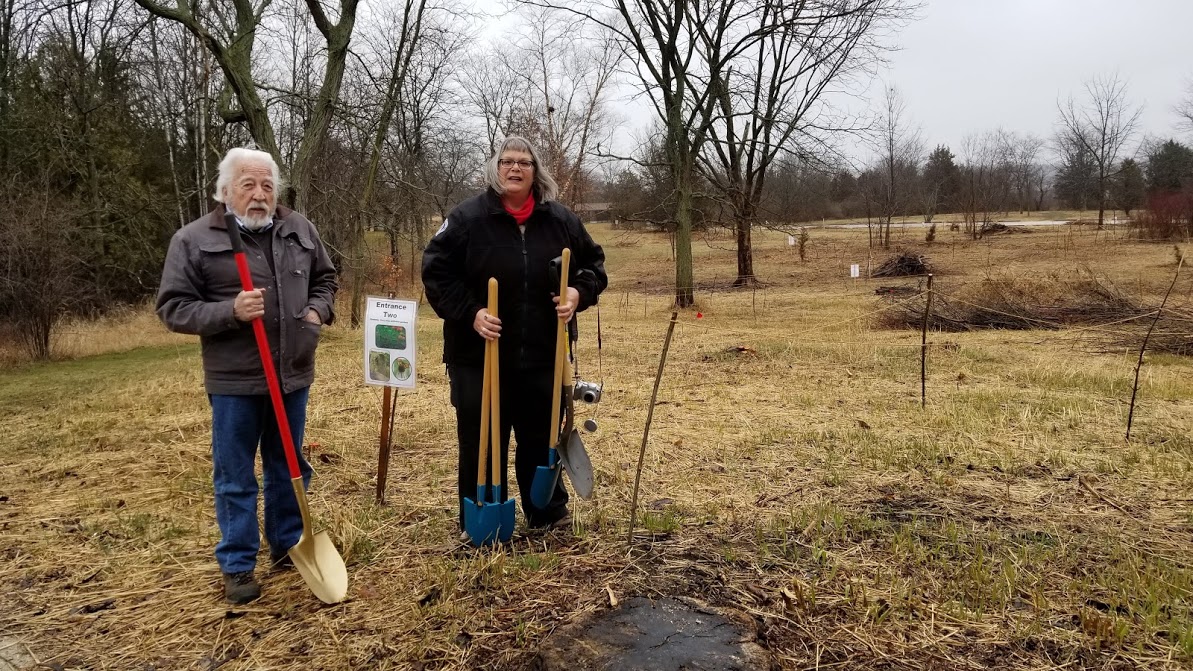
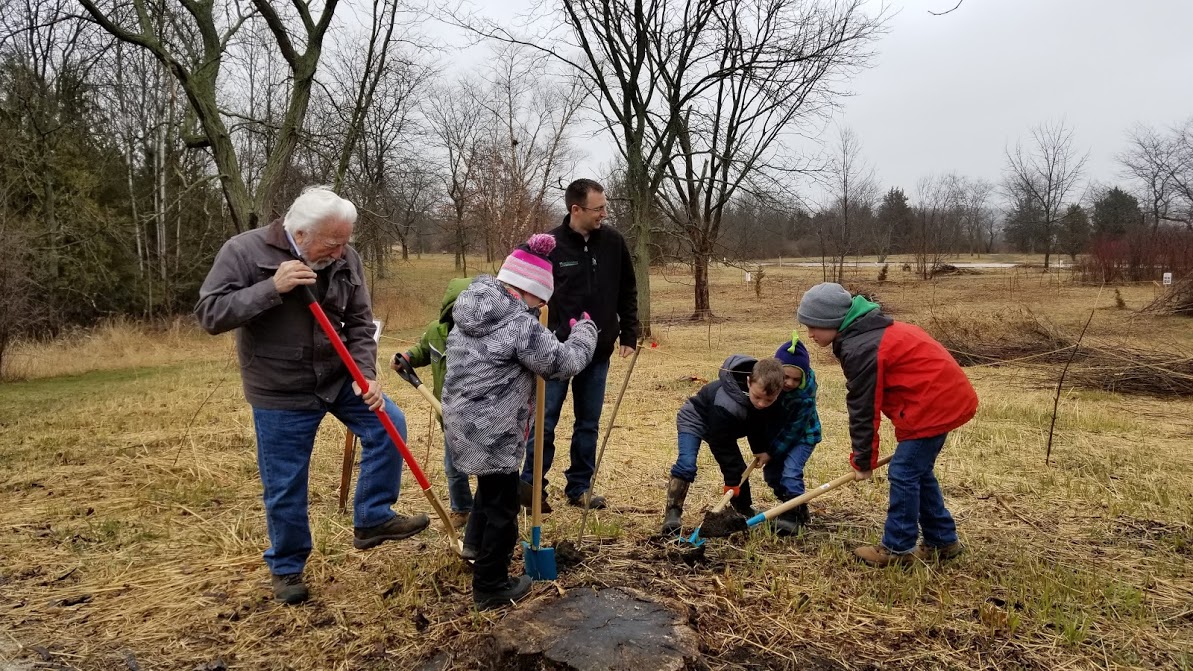
April 14, 2018 - Bong Wisconsin State Recreation Area Celebrated Ground Breaking for the Accessible Nature Explore Classroom
We are excited to announce this week's groundbreaking for the Richard Bong (Wisconsin) State Recreation Area and their Friends group, the Bong Naturalist Association, who are raising funds and installing a Nature Explore Classroom. Hoping to disconnect kids from their electronics and grant opportunities that may not otherwise be available, the Nature Explore Classroom will allow kids to develop an appreciation of nature, science, art and music and a lifelong passion for nature activities.The project has been the dream of Beth Goeppinger, Naturalist at the park. (See photo) Known for the Accessible Cabin at Bong, our NHU President, Art Miller (See photo) of Miller Engineering was asked and volunteered services to create the construction plan. Along with Lavern Nall, Strass Maguire Architects, they implemented the layout of accessible grading and walkways. With eleven "classroom" areas dedicated to nature, movement and explore areas, the meandering trail takes one through woods, by rocks and bushes, and up and down gentle slopes, which will now be entirely ADA accessible. The Bong Naturalist Association is still looking for donations - cash or in-kind. Work days will be held this spring and a fundraising Open House will be on Saturday, June 2 from 10am-12noon at the park.
YOU can get involved with this exciting project!
For more information, visit the bongnaturalistassociation.org or call (262) 878-5607.
Read more at Accessible Opportunites in the Outdoors

March 2018 - Thanks to everyone who participated in our 16th Annual NHU Benefit Raffle & Silent Auction
Our 2018 event was held at the US Bank Center, downtown Milwaukee, March 21st and 22nd. NHU Salutes Our
2018 Raffle and Auction Donors and to you, our supporters, our NHU Benefit Spring fundraiser was a great success!
March 21-22, 2018 - 16th Annual NHU Benefit Raffle & Silent Auction
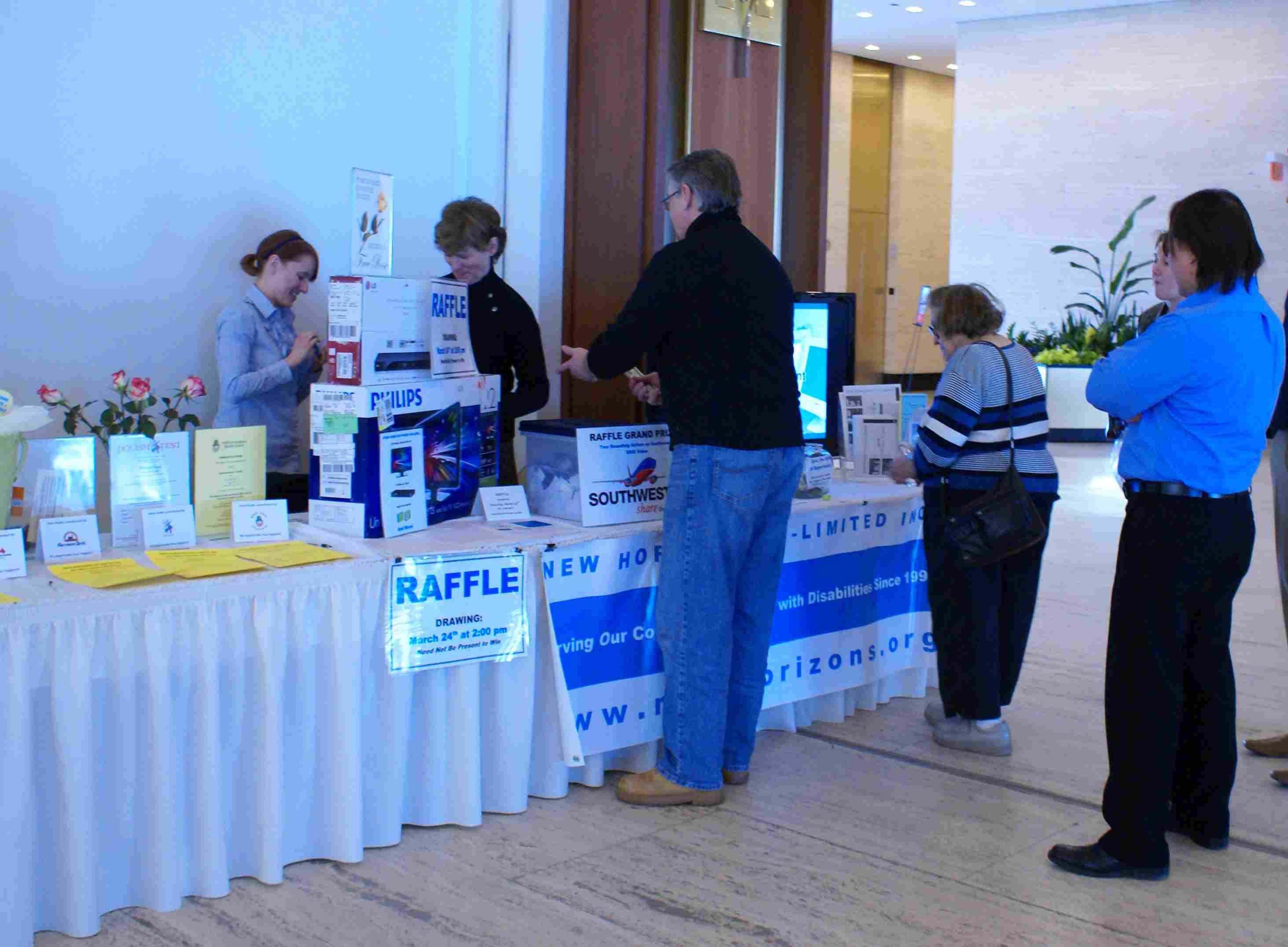 Learn More About Our 16th Annual Benefit Raffle and Silent Auction
to purchase raffle tickets and contribute donations.
March 22, 2018
US Bank Center Galleria, Downtown Milwaukee
Need Not Be Present To Win
Raffle Tickets:
$2 each, 3 for $5, 7 for $10 or 20 for $20
Other prizes include restaurant certificates, hotel stays, festival and museum tickets, sporting event tickets and more. Check out our 2018 Raffle and Silent Auction Prize List. Check back often as we update our complete list of prizes.
Stop by the day of our event to bid in the Silent Auction or purchase your Raffle tickets.
March - Catch all the great athletes of the Winter Paralympics and videos on Yahoo!
If you missed the Paralympics 2018 in South Korea this month, countries' athletes participated in sports, events. Visit the following for the Schedule and Results Click on the event in the schedule and the link will take you to the results of each event that day, click on the event and it will take you to more information like the athletes with images about the final. Did you miss the games? Catch the athletes at the games or watch your favorite event again, visit this awesome video gallery of many of the events on Yahoo Paralympic Games 2018
March 2018 - Employment and Economic Advancement Resource Map
The LEAD Center has prepared the Employment and Economic Advancement Resource Map to identify national initiatives that can support individuals as they take steps toward establishing financial stability. The next step will be to identify the local providers of these services within your community. If you already have a trusted source to identify these local providers, this guide will add to what you already know. If you don�t have a resource expert, this guide is a place to start. Call 211 for local providers.
Utilize the Employment and Economic Advancement Resource Map
The National Center on Leadership for the Employment and Economic Advancement of People with Disabilities (LEAD) is a collaborative of disability, workforce and economic empowerment organizations led by National Disability Institute with funding from the U.S. Department of Labor�s Office of Disability Employment Policy.
February 2018 - #MeToo Movement founder, Tarana Burke, explains #MeToo movement is about Healing - See the NJ.com Article
"The work of #MeToo is about healing," she said. "It's about healing as individuals and healing as communities. And it's about interrupting sexual violence wherever it lives."
"Speaking to a receptive crowd that was about one-third men and two-thirds women, Burke said the movement must center on marginalized women, particularly women of color, queer and transgender women, and women with disabilities, whose stories are often overlooked. It has to also include men, whose experiences with sexual violence she said are often childhood abuse." Learn more at this article by NJ.com #MeToo movement is not a witch hunt -- it's about healing, founder tells Rutgers
January 2016 - Me Too Movement beginning to Tell the Story for Women with Disabilities
The Me too Movement reveals that 83% of women with disabilities are victims of sexual assault. Boys with disabilities may also become victims of sexual assault. Another sobering statistic is that 80% of the wrongdoers are people that the woman knows. This holds true for persons with disabilities and it particularly disturbing that it is likely to be someone that they rely on such as a family member, or foster parent, a friend or acquaintance, or a caregiver. As more stories come forward, NHU will educate more on sexual assault, how to protect oneself or one's child.January 2018 - Finding a Cure for a Rare Genetic Version of Rett Syndrome
This Today Show article tells the story of Richard Engle's son, Henry, who has a rare version of Rett Syndrome. Richard Engle, chief foreign correspondent for NBC News and his wife, Mary Forrest, have gone public with their son's case to help other parents with children with rare disease know they are not alone. Usually only found in girls, Henry's genetic disorder will cause lifelong, incurable, permanent imparment, physically and cognitively. His case offers medical science a unique situation that the researchers at Duncan Neurological Research Institute at Texas Children�s Hospital hope will lead to more answers in order to "boost a protein called MECP2, which is essential for brain function but which Henry�s body doesn�t produce enough of to control his mind." For more on the research, visit the Duncan Neurological Research Institute. Dr. Huda Zoghbi hopes Henry will lead them to an answer for all of those with this genetic disorder.
January 2018 - Wisconsin State Parks accept Accessible Cabin reservations
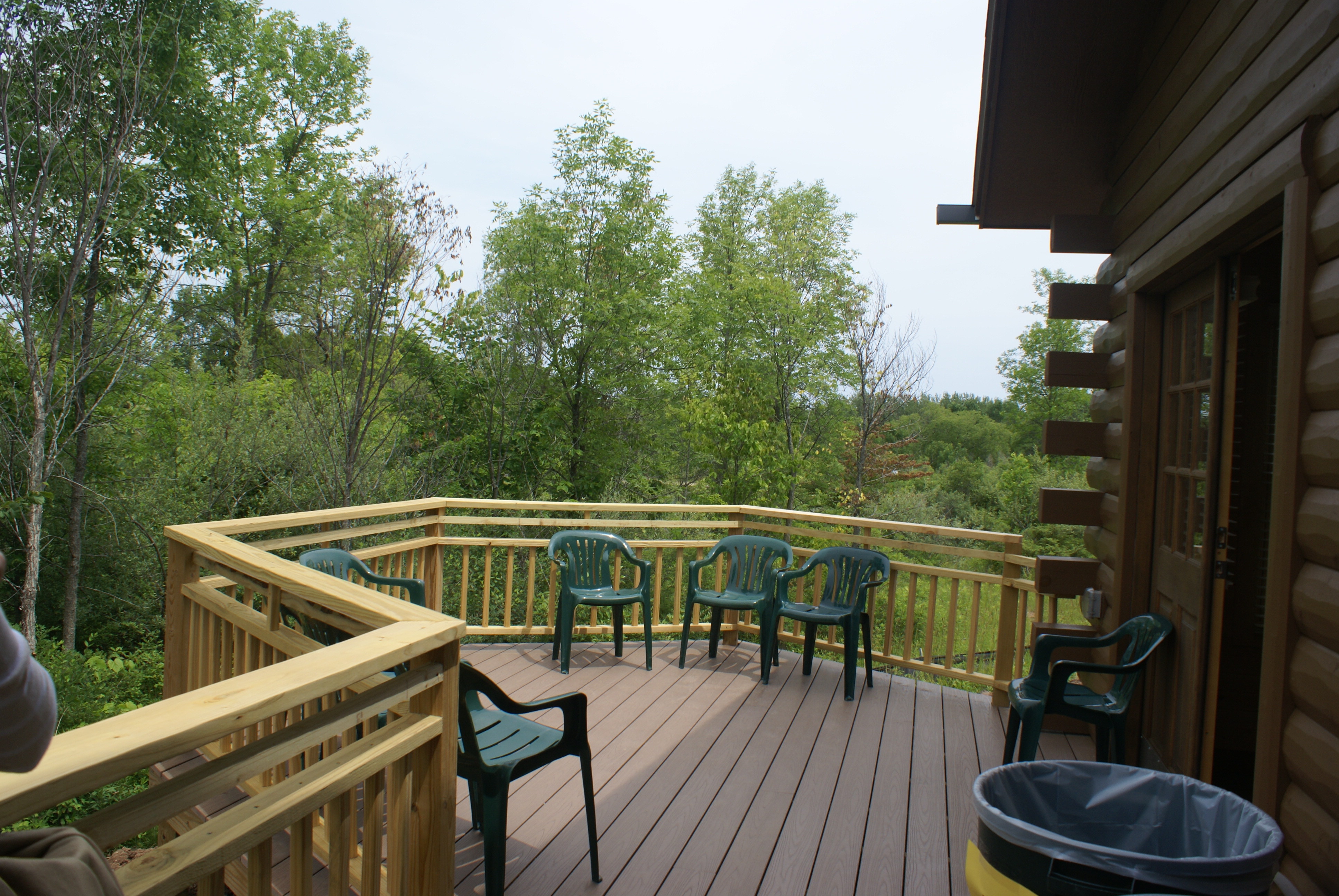 Wisconsin State Parks will begin accepting Accessible Cabin reservations on January 10, 2018 for the 2018 camping season. There are eight accessible cabins and two rustic accessible cabins currently available in the Wisconsin State Park System. The cabins are available for use exclusively by people whose physical disability makes use of traditional camping facilities very difficult or unlikely.
Accessible modern cabins are available at Wisconsin's Harrington Beach, Kohler-Andrae, Mirror Lake, Buckhorn, High Cliff, and Potowatami state parks, Richard Bong State Recreation Area and Kettle Moraine State Forest-Southern Unit. Rustic accessible cabins are available at Copper Falls and Blue Mound state park.
For more information visit: January 2018 - Wisconsin State Parks accept Accessible Cabin reservations
December , 2017 - Alzheimer's, Caregivers and Social Security Compassionate Allowances
Shining a Light on Those Who Provide Dementia Care article by Robert Egge, Alzheimer�s Association, Chief Public Policy Officer posted on Social Security Matters, has some interesting statistics on Alzheimer's and caregivers, and that you can get an early onset ruling from social security through SS Compassionate Allowances if you are under 65. "5 million Americans provide unpaid care for more than 5 million people living with Alzheimer�s or other dementias. It is estimated that in 2016 those caregivers delivered 18.2 billion hours of assistance, often at the cost of personal and financial sacrifices, according to a survey by the Alzheimer�s Association for the 2016 Alzheimer�s Disease Facts and Figures. A large percentage of those who are caregivers of someone with Alzheimer�s cut back on their own expenses (including food, transportation and medical care) to pay for dementia-related care of a family member or friend. Many caregivers reduce or quit working to provide care for a loved one, resulting in a loss of income."
You can also visit Social Security�s Compassionate Allowances site to learn more about Alzheimer�s and other medical conditions that allow expedited processing of Social Security disability benefits.
December 3, 2017 - UN - International Day of Persons with Disabilities-2017 Theme: �Transformation towards sustainable and resilient society for all�
The UN The annual observance of the International Day of Disabled Persons was proclaimed in 1992, by the United Nations General Assembly resolution 47/3. It aims to promote the rights and well-being of persons with disabilities in all spheres of society and development, and to increase awareness of the situation of persons with disabilities in every aspect of political, social, economic and cultural life. The 2030 Agenda pledges to �leave no one behind�. Persons with disabilities, as both beneficiaries and agents of change, can fast track the process towards inclusive and sustainable development and promote resilient society for all, including in the context of disaster risk reduction and humanitarian action, and urban development. Governments, persons with disabilities and their representative organisations, academic institutions and the private sector need to work as a �team� to achieve the Sustainable Development Goals (SDGs).
November 30, 2017 - U.S. Government Accountability Office (GAO) Report States-Private School Choice: Federal Actions Needed to Ensure Parents Are Notified About Changes in Rights for Students with Disabilities
In the above Report GAO estimates that no more than half of all schools participating in any type of voucher program mention students with disabilities anywhere on their websites, according to GAO's review of a nationally generalizable sample of websites of private schools in voucher programs. Further, GAO estimates that no more than 53 percent of private schools in voucher programs designed for students with disabilities provide disability-related information on their websites.
Private schools funded through the taxpayer-financed voucher program may lack accountability for employee background checks, student performance transparency and no academic or standardized testing. Still parents may feel their student will thrive better in the private school. When a student with a disability transfers from a public school to a private school, parents and students need to be aware that disability rights and protections are not required of the private school. The GAO is recommending federal actions to ensure parents are notified of the changing rights when a student with disabilities transfers from public to private school.November, 2017 - CDC Reports Prevalence of Developmental Disability is On the Rise
According to the NCHS Data Brief, No. 291, November 2017 - the U.S. DEPARTMENT OF HEALTH AND HUMAN SERVICES, Centers for Disease Control and Prevention, National Center for Health Statistics has Estimated Prevalence of Children With Diagnosed Developmental Disabilities in the United States, 2014�2016 by Benjamin Zablotsky, Ph.D., Lindsey I. Black, M.P.H., and Stephen J. Blumberg, Ph.D. with the conclusion that:
Children ever diagnosed with any developmental disability significantly increased, from 5.76 percent in 2014 to 6.99 percent in 2016.
The prevalence of children ever diagnosed with a developmental delay other than autism spectrum disorder or intellectual disability increased, from 3.57 percent in 2014 to 4.55 percent in 2016.
There was not a statistically significant change in the prevalence of children ever diagnosed with autism spectrum disorder from 2014 to 2016.
The prevalence of children ever diagnosed with intellectual disability did not significantly change from 2014 to 2016.
Visit the full summary at the link above.
November 1, 2017 - Open enrollment for health insurance starts today
If you're uninsured or looking for more affordable health insurance, the �open enrollment� period is the time to visit healthcare.gov or your state�s marketplace or health insurance exchange. If you have insurance through the marketplace revisit your account to make sure it is up to date. The CCD has created a fact sheet on how to contact the market place (Link No longer available) http://www.c-c-d.org/fichiers/CCD-aca-one-pager-op-enroll_2018_BJL_Edits.pdf CCD ACA Open Enrollment 2018October 2017 - Government of Uganda sets up National ICT for disability policy
The Government of Uganda set up a National Information and Communication Technology disability policy to uptake and improve utilisation of ICTs to ensure universal access to services and opportunities for people with disabilities.October 2017 - State of Michigan to get Federal Help to Improve Employment of People with Disabilities
The State of Michigan will receive 300 hours of training, both in person and online, from the U.S. Department of Labor's Office of Disability Employment Policy as part of a national effort called Employment First targeted at helping people with disabilities find employment. The program is intended to help create competitive and integrated job opportunities for disabled residents by encouraging employers to create such opportunities, as well as help state agencies that serve people with disabilities and workforce development purposes to coordinate policy goals. The federal government defines "integrated employment as jobs" in which people with disabilities are paid directly by their company, work in a typical environment where they can interact with coworkers who aren't disabled and have opportunities for career advancement.September 2017 -Your Medicaid and Community based Health Care are again in jeopardy
Read our Advocacy Alert! at 10 Days to Stop Latest Health Care Repeal Effort and contact your Senator especially the 4 that created this bill. The Graham-Cassidy-Heller-Johnson (GCHJ) bill. Check out this article at Disability Scoop - Medicaid Home And Community-Based Services Face New Threat. Michelle Diament reports the Consortium for Citizens with Disabilities, The Arc and the Autistic Self Advocacy Network are joining with other groups to hold a rally Tuesday afternoon on Capitol Hill with Senate Minority Leader Chuck Schumer, D-N.Y., to protest the health care proposal.
September 2017 -Hurricanes Harvey and Irma: Learn how to assist people with disabilities from the storms
Want to help people with disabilities who were in Hurricanes Harvey and Irma? Visit our NHU GuideHow to Donate or Provide Disaster Relief Assistance for People with Disabilities
This guide covers how to assist someone with a disability in a disaster, how to donate and who to donate to or offer help during a disaster to reach people with disabilities, what to know before you give so you can avoid scams or make your be truly assistive and more.
August 2017 -New Book by poet Molly McCully Brown - The Virginia State Colony For Epileptics And Feebleminded, poetry explores experiences with disability, eugenics and faith.
See the podcast or read the text of the Terry Gross, (WYPR), interview with poet Molly McCully Brown, who has Cerebral Palsy and grew up near the Central Virginia Training Center, Poet Imagines Life Inside A 1910 Institution That Eugenics Built. Today a residential home for people with various intellectual disabilities, but built in 1910 as The Virginia State Colony For Epileptics And Feebleminded, it was part of the eugenics movement taking hold in the U.S. at that time and provided what are now considered to be inhumane treatments including forced sterilization. Brown notes that if she had been born in a past era, she may have been sent to live there herself.
The podcast explores her experience with disability, providing insight to how disability is viewed and scientifically explained now as opposed to the past and how her faith helps her as well as leaves her with questions. Her research and poetry of the past "colony" attempt to define the lives of those who lived in the colony and the great misconception that they were somehow less worthy to live their lives or to be able to understand and accept the challenges they faced with help. Brown living in this century describes her own experience "....my body was not an accident or a punishment or a mistake, but as the body that I am meant to have and that is constitutive of so much of who I am and what I've done and what I hope I will do in the world." It is difficult to hear the discrimination of eugenics projected in Brown's poetry, but like the stories of the holocaust, it reminds us that we must stand up for the rights of all people including people with disabilities.
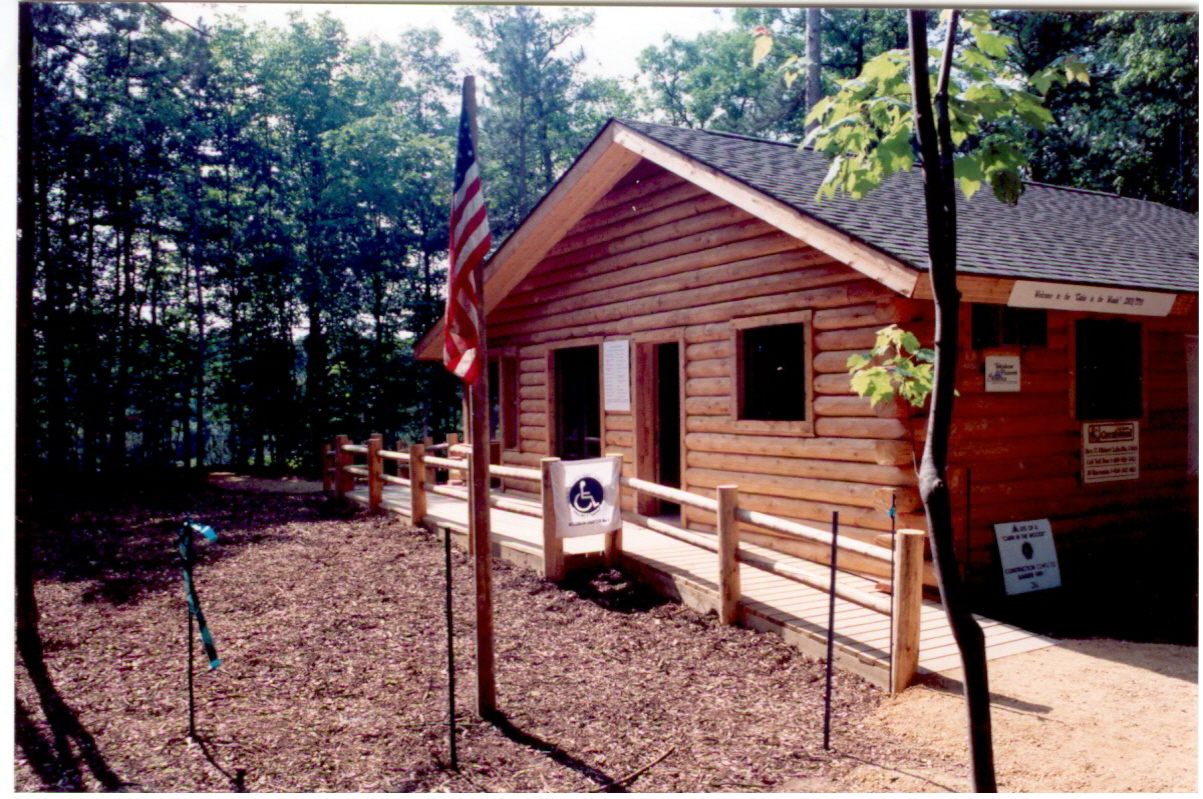
July, 2017 -Celebrate the 27th Anniversary of the Americans with Disabilities Act (ADA)
How has the ADA helped you!
We must not be complacent, we must continue to be actively educating, training and building accessible awareness in our communities!
Share your ADA experience with us at NHU!
At New Horizons Un-Limited we celebrate the ADA by honoring the activism and effort of the committee and volunteers
Who Designed and Built the First Accessible
Camping Cabins in the Wisconsin State Parks! 1990-1991!
Wisconsin was given a great gift in 1991, Mirror Lake Accessible Camping Cabin for people with disabilities and their famlies to be able to enjoy the Wisconsin State Park.
We must appreciate today the amount of time and commitment that the members of the committee, the efforts of Anthonette Gilpatrick, Accessiblity Coordinator for the Wisconsin DNR, the Wisconsin DNR, Paul Quick II, architect and Art Miller, engineer and the Telephone Pioneers. This was just before the ADA was brought to law, yet the accessible ideas and decisions they made are the basis for the design and the accessible priorities and implementation of the seven additional cabins that have been built since 1991 in the Wisconsin State Parks.
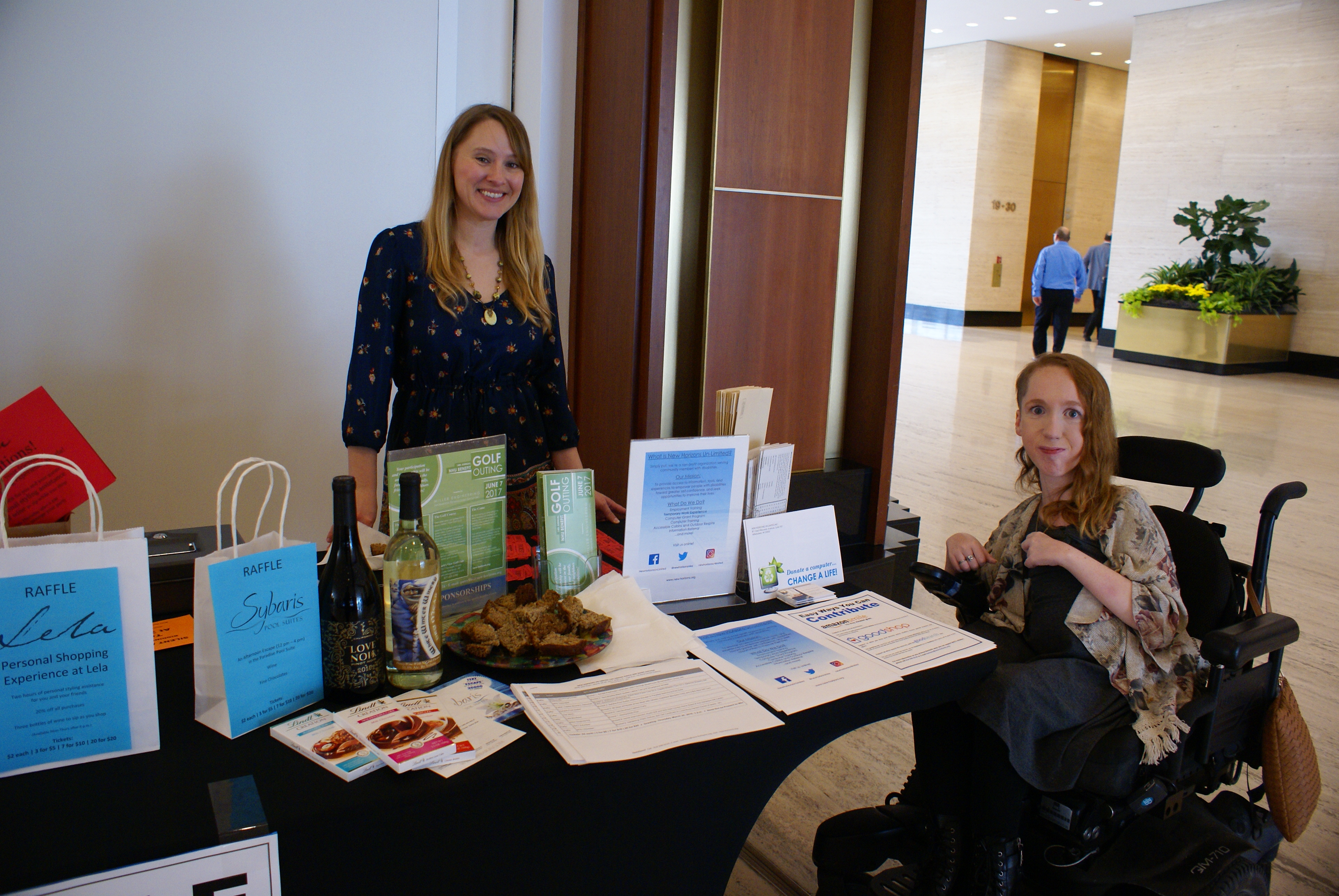
March 2017 - Thanks to everyone who participated in our 15th Annual NHU Benefit Raffle & Silent Auction
Our 2017 event was held at the US Bank Center, downtown Milwaukee, March 29 and 30th. NHU Salutes Our
2017 Raffle and Auction Donors and to you, our supporters, our NHU Benefit Spring fundraiser was a great success!
March 29-30, 2017 - 15th Annual NHU Benefit Raffle & Silent Auction
Learn More About Our 15th Annual Benefit Raffle and Silent Auction
to purchase raffle tickets and contribute donations.
March 30, 2017
US Bank Center Galleria, Downtown Milwaukee
Need Not Be Present To Win
Raffle Tickets:
$2 each, 3 for $5, 7 for $10 or 20 for $20
Other prizes include restaurant certificates, hotel stays, festival and museum tickets, sporting event tickets and more. Our 2017 Raffle List is in development. Check back often as we update our complete list of prizes before the drawing.
February 2017 - Disability Awareness: A Movie, a Television Series, and a Book
Check out the movie - The Fundamentals of Caring on Netflix. In this inspirational buddy comedy, a young shut-in and his caregiver take a road trip in search of landmarks, but end up finding hope and friendship, starring: Paul Rudd, Craig Roberts, and Selena Gomez. You might have some issues with this movie, but all in all a good film to bring disability awareness.Check out the Television Series - Speechless on ABC - Maya DiMeo (Minnie Driver) is a mom on a mission who will do anything for her husband Jimmy, her kids Ray, Dylan, and JJ, her eldest son with cerebral palsy. As Maya fights injustices both real and imagined, the family works to make a new home for themselves, and searches for just the right person to give JJ his "voice." Speechless stars Minnie Driver as Maya DiMeo, John Ross Bowie as Jimmy DiMeo, Mason Cook as Ray DiMeo, Micah Fowler as JJ DiMeo, Kyla Kennedy as Dylan DiMeo and Cedric Yarbrough as Kenneth. Disability and parent advocacy awareness.
Check out a new book for children, Six Dots, by Jen Bryant and illustrated by Boris Kulikov, about young Louis Braille, who became blind and used French military code to invent an alphabet system for those with visual impairment. A system so ingenious that it is still used by people today!
February 6, 2017 - Consumer Reports Urges FDA to Keep Ban on Off-Label Drug Promotion at Hearing
Check out this article for more information on the Consumer Reports' Survey of Americans that favor maintaining the current ban for manufacturers to promote off-label uses of precription drugs by a large margin. "Consumer Reports advises patients to ask their doctor or pharmacist whether a drug is being prescribed for an approved use. You can also check for this information on the National Institute of Health's website http://www.dailymed.nlm.nih.gov where you can search any drug and learn more about its approved uses by clicking on "Indications & Usage." "Be sure to ask your healthcare provider if a drug is being prescribed for and unapproved use, whether the use is supported by studies or if and why it is better than approved drugs. Ask for the risks and benefits, as well as other options for any prescribed medication."
February 1, 2017 - New Horizons Un-Limited Press Release - Supporting Personal Journeys Toward a Brighter Future: Computer Grant and Training Program - Arlene's Journey
NHU cares enough NOW, to ensure our collective futures by offering the opportunity to our community members with disabilities the information, tools and experiences for lifelong learning. We believe that fulfillment can be achieved in many different ways and at every stage of life. We encourage volunteering and teaching others to enable people to be confident, contributing citizens. Our communities� citizens accept the challenge to invest in themselves! NHU holds a spotlight on our efforts to open gateways to full participation and opportunity with another personal journey from our programs, Arlene's Journey. Learn what your contributions to NHU have meant to affect change toward a brighter future for individuals. Help NHU reach more individuals this year by giving to NHU and participating in our fundraisers.
-